


Japanese New Year Custom for Kids - Otoshidama-
Updated: May 9, 2023

One of the things I loved about Oshogatsu when I was a child but I don’t like about it as an adult is, Otoshidama (お年玉). This is a Japanese New Year custom that children receive some money during the new year. As I grew up in a small family and I had relatives only from my mother’s side, the amount of Otoshidama wasn’t so big. But some of out classmates would collect around 500€ which was a great deal for a 11-year-old child. We would have a competition who got more money. I would never told how much I received since I had only a few relatives.

As an adult, Otoshidama is a completely another story. I haven’t been back to Japan for the new year for a long time and I could somehow manage not to give otoshidama to my nieces and a nephew. But the things have changed since my son was born. His grandma wants to see him and one year, we went to spend the new year in Japan. I had five nieces and nephews at that time and I gave 20 to 30€ each. Ouch….

Now I’m glad I don’t have a big family but still, I will have seven nieces and nephews by next new year. Since my son gets some, I will have to give them too. I better start saving up some money.
But how much do you have to give them? There are some standard amounts.
0 to 5 years old : 1000 yen (9-10€)
6 to 9 years old : 2000 yen (18-20€)
9 to 12 years old : 3000 yen (28-30€)
Secondary school students : 5000 yen (48-50€)
High school to university students : 5000 yen to 10,000 yen (48-100€)
This is just an idea and each family has a slightly different price setting.


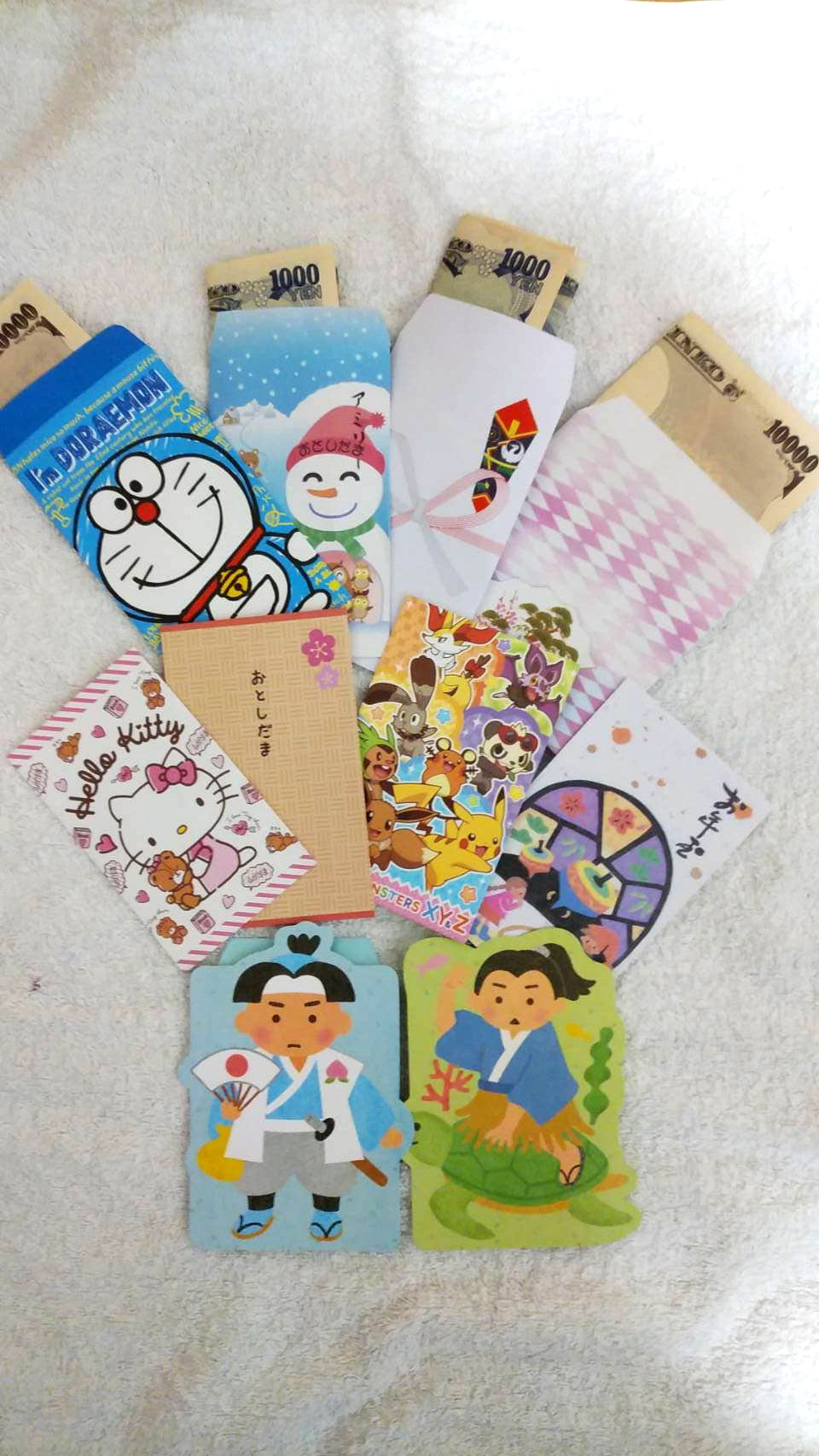
If you are giving otoshidama, make sure you prepare new bills and not from your wallet. New bills mean “new start” and “preparation for this new year”. You can have them changed at any banks or post offices. So be prepared.
Also the bills are commonly folded in three. Never fold in four, because number 4 can be pronounced “shi” in Japanese and this sound also reminds Japanese people death (死, “shi”). It’s not so appropriate for a fresh new year.
Here is a video shows you how to fold the bill in three.
References:
When and how much should we give otoshidama? : https://nacchi33.net/entry/2017-10-10-083000/
Otoshidama should be fold in three : https://kosodate19.com/11879.html
More about Japanese New Year


BIOS PS2 is an interesting part of the PlayStation 2 experience. It is always good to learn more about its role in understanding how the original console works.
The apna khata portal is an important topic for anyone interested in Rajasthan land information. Users can benefit from clear educational content explaining online records, account details, and the general process of accessing services.
Otoshidama sounds like such a fun New Year memory for Japanese kids! I love how a little envelope of money feels so exciting. If kids want to write coded thank-you notes, a Symbol Translator could turn messages into Morse code or hieroglyphs for extra fun.
Information about how to consultar rfc verify an RFC con homoclave, and understand the relationship between RFC and CURP can help people avoid common mistakes. It is also useful to know how the SAT uses RFC details for official tax purposes.
Great article! I really appreciate the effort you've put into explaining this topic in such a clear and helpful way. Having access to reliable online tools makes learning and solving mathematical problems much easier. Platforms like CalcSolver, SolveCalc, and CalcSolve can be particularly helpful for students who need assistance with calculations, while a good calculus solver or solver can make even complex mathematical concepts easier to understand. Thanks for sharing such valuable insights!